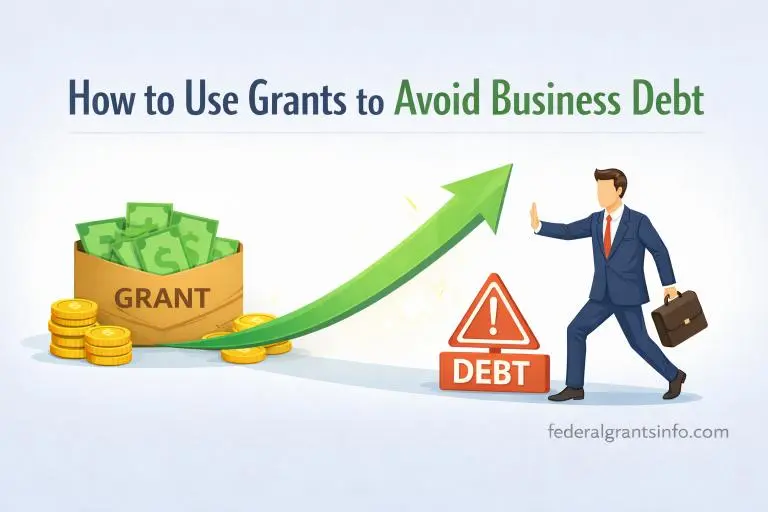
Business debt can slow growth, strain cash flow, and increase failure risk. For many entrepreneurs, the goal in 2026 is simple: grow without borrowing. Grants make this possible when used correctly.
Grants provide non-repayable capital. They do not add interest. They do not create monthly pressure. When structured properly, grants can replace loans, reduce borrowing needs, or delay debt until the business is strong enough to handle it.
This guide explains how to use grants strategically to avoid business debt, what grants can realistically cover, and how to build a debt-free funding plan.
Why avoiding debt matters for businesses
Debt is not always bad, but it is risky for early-stage and growing businesses.
Business debt creates:
- Fixed monthly repayments
- Interest costs that reduce profit
- Cash-flow pressure during slow periods
- Limited flexibility in decision-making
Many businesses fail not because they are unprofitable, but because they cannot service debt during unstable periods.
Grants remove this pressure.
What grants are best used for
Grants work best when applied to non-urgent, long-term, or foundational expenses.
These include:
- Equipment and technology
- Product development
- Innovation and research
- Training and systems
- Sustainability upgrades
- Business setup costs
Using grants for these areas prevents the need to borrow later.
How grants help replace debt
Grants avoid debt in three key ways.
First, they eliminate repayment entirely when conditions are met.
Second, they reduce the amount of capital a business needs to borrow.
Third, they strengthen the business, making future borrowing cheaper or unnecessary.
When grants cover fixed or capital expenses, cash flow remains available for operations.
Step one: separate expenses by risk level
To avoid debt, you must separate business costs correctly.
Low-risk, long-term costs should be grant-funded.
High-speed, revenue-driven costs may require other funding later.
Grant-friendly costs usually include:
- Assets with long lifespan
- Development projects
- Capacity building
Debt becomes unnecessary when these costs are removed from cash flow.
Step two: align grants with clear projects
Grants are not general funding. They are project-based.
To use grants effectively:
- Define a specific project
- Set clear outcomes
- Build a realistic budget
- Match the grant to the project
Clear alignment increases approval chances and prevents misuse.
Step three: plan operations without borrowing
Many businesses make the mistake of using loans for setup costs.
Instead, use grants for setup and infrastructure.
Use revenue for operations.
This approach delays debt until the business is stable or removes the need entirely.
Businesses that fund infrastructure with grants operate with lower monthly pressure.
Step four: use grants to strengthen cash flow
Grants indirectly improve cash flow.
When equipment, systems, or training are grant-funded:
- Monthly expenses drop
- Profit margins improve
- Emergency borrowing becomes less likely
Cash flow stability is the strongest defense against debt.
Step five: stack grants instead of loans
Many businesses rely on one grant only.
A smarter approach is grant stacking, where allowed.
This involves applying for multiple grants that fund different aspects of the business without overlapping expenses.
For example:
- One grant for equipment
- Another for training
- Another for innovation
This approach can eliminate large capital costs without borrowing.
What grants cannot replace
Grants are powerful, but not universal.
They usually cannot fund:
- Daily operating expenses
- Payroll unrelated to projects
- Inventory for resale
- Emergency cash needs
Trying to use grants for these purposes often leads to rejection or compliance issues.
Common mistakes that lead to debt anyway
Some businesses still fall into debt despite receiving grants.
Common mistakes include:
- Using grant funds incorrectly
- Delaying revenue generation
- Waiting too long between grants
- Ignoring compliance requirements
Grants must be part of a broader financial plan.
How grants improve long-term funding options
Even when debt becomes necessary later, grants improve terms.
Grant-supported businesses often:
- Borrow less
- Access better rates
- Qualify for funding faster
- Maintain stronger balance sheets
Grants do not just avoid debt. They make future funding safer.
A realistic debt-free growth path
A sustainable path often looks like this:
- Grants fund setup and development
- Revenue funds operations
- Profits fund expansion
- Debt becomes optional, not necessary
This approach prioritizes survival before scale.
Final perspective
Grants are one of the most effective tools for avoiding business debt. They reduce risk, protect cash flow, and fund growth without pressure.
However, they require planning, patience, and discipline.
Businesses that use grants strategically do not just avoid debt.
They build stronger, more resilient operations.
Frequently Asked Questions (FAQ)
Can grants completely eliminate the need for business loans?
In early stages, yes. Grants can cover setup, development, and infrastructure. Growth stages may still require other funding later.
What types of expenses should always be grant-funded?
Equipment, systems, innovation, training, and long-term assets are ideal for grant funding.
Are grants safer than loans for small businesses?
Yes. Grants do not create repayment pressure, which makes them safer for cash flow.
Can a business rely only on grants long-term?
Usually no. Grants are best for development. Sustainable businesses rely on revenue over time.
Is grant stacking allowed?
Often yes, if rules permit and expenses do not overlap. Each grant must fund a distinct project.
Do grants affect future borrowing ability?
Positively. Grants strengthen financial position and reduce risk for lenders.
Why do some businesses still fail after receiving grants?
Poor planning, misuse of funds, and lack of revenue strategy are common reasons.
Should grants be part of every business funding plan?
Yes, especially for early-stage and asset-light businesses seeking to avoid debt.