A Complete Safety Guide for Individuals, Businesses, NGOs, and Researchers
Grants can unlock education, grow businesses, fund research, and support communities. Unfortunately, the rise in real funding opportunities has also created space for fake grants designed to exploit people’s hope and urgency.
This guide explains, in clear terms, how legitimate grants work, how scams operate, and how you can confidently tell the difference before applying for any funding opportunity.
Why Grant Scams Are Increasing Worldwide
Grant scams are not random. They grow fastest during periods of economic pressure, high unemployment, and increased online funding awareness.
Many people are actively searching for financial support, and scammers take advantage of this demand by imitating government agencies, foundations, and international organisations. Social media, messaging apps, and fake websites make it easier for these scams to look convincing.
Understanding why scams exist helps you stay alert instead of emotional..
The Golden Rule of Legitimate Grants
Before learning anything else, you must understand one rule that never changes.
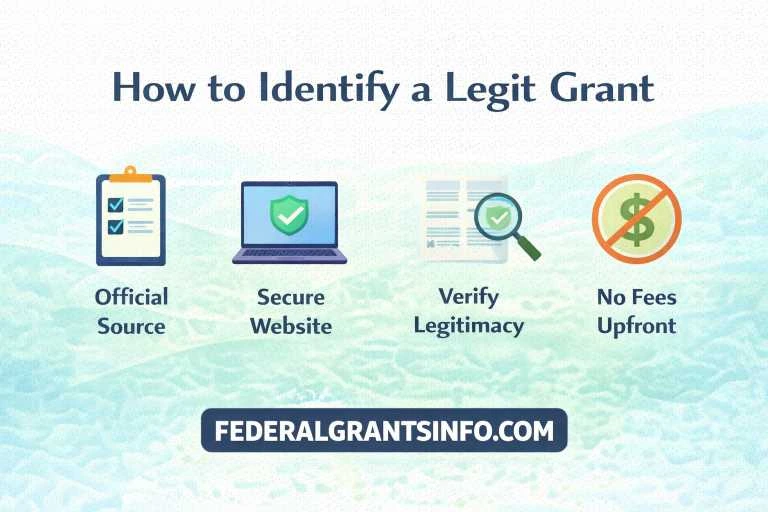
A legitimate grant does not ask you to pay money in order to receive money.
This rule applies at every stage of a grant process. Real grants are funded by governments, foundations, or donors who already have allocated budgets. They do not depend on applicant fees to operate.
If payment is requested at any point, the grant is no longer legitimate.
Common payment excuses used by scammers include:
- Application or form fees
- Verification or identity checks
- Training or onboarding charges
- “Activation” or disbursement processing fees
- Priority or fast-track approval payments
These are classic warning signs.
How Legitimate Grants Actually Work
Real grants follow structured systems because donors must account for every fund they distribute.
Before bullets, it’s important to understand that real grants value accountability, impact, and transparency. Because of this, their processes are usually slow, methodical, and well-documented.
A legitimate grant process typically includes:
- A publicly announced call for applications
- Clearly defined eligibility rules
- A competitive review or screening process
- A waiting period for evaluation
- Official communication of results
- Monitoring, reporting, or progress checks
If a grant skips most of these steps, it deserves closer scrutiny.
How Grant Scams Manipulate Applicants Emotionally
Scammers rarely rely on facts. They rely on pressure.
They design messages to trigger excitement, fear, or urgency so that victims act quickly without verifying details. This emotional manipulation is one of the strongest indicators of a fake grant.
Common emotional tactics include:
- Sudden congratulations without evaluation
- Threats of losing a “slot” within hours
- Countdown timers designed to create panic
- Claims of being “specially selected”
Real grant providers do not rush applicants. They give clear deadlines and allow time for decision-making.
Common Grant Scam Patterns You Should Recognize Early
Most fake grants follow predictable patterns. Once you recognize them, they become easy to avoid.
One common pattern is instant approval. Scammers often claim you are “qualified” immediately after submitting basic information. No real grant approves applications without review.
Another common pattern involves fake dashboards. These dashboards show approval status and next steps, but everyone who registers sees the same result.
Typical scam patterns include:
- Automatic “approved” status
- Instructions to “start disbursement”
- Requests for small but urgent payments
- Vague explanations of how funds are released
These systems are designed to collect money, not distribute it.
How to Verify a Grant Before Applying
Verification protects you from loss. It should always happen before you submit personal or financial information.
Verifying the Organization
A real grant is backed by a real institution with a public presence and history. Before trusting a grant, confirm that the organisation exists beyond the application page.
You should be able to find:
- An official website with consistent information
- Clear organisational mission and contact details
- Evidence of past programmes or beneficiaries
If the organisation cannot be independently verified, proceed with caution.
Verifying the Application Channel
Legitimate grants use secure and traceable application systems. These systems protect applicant data and ensure transparency.
Be cautious if applications are handled only through:
- WhatsApp or Telegram messages
- Personal email addresses
- Unbranded or anonymous forms
Professional grants invest in proper application platforms.
Verifying Public Confirmation
Before applying, search for public confirmation of the grant. Real grants are usually announced through official channels or trusted partners.
If a grant exists only as a forwarded message or social media post, verify further before proceeding.
Language That Often Signals a Fake Grant
The language used in grant announcements can reveal a lot.
Scammers often use exaggerated or absolute statements because they want to sound appealing rather than accurate.
Be careful when you see phrases such as:
- “Guaranteed funding”
- “No rejection”
- “Instant payout”
- “Secret government support”
- “Slots reserved for you”
Legitimate grant language is neutral, cautious, and professional.
Protecting Your Personal and Financial Information
Even when a grant is real, information must be handled carefully.
You should only share sensitive information through secure, official platforms and only when it is clearly required.
Never share the following casually:
- Bank login details or OTP codes
- BVN, NIN, or SSN with agents
- ID documents via chat apps
Real grant administrators explain why each document is required and how it will be protected.
What Legitimate Grants Expect From Applicants
Understanding what real grants ask for helps you distinguish them from scams.
Legitimate grants focus on impact, feasibility, and accountability. They invest time in reviewing proposals and expect beneficiaries to deliver results.
You may be required to submit:
- Project proposals or concept notes
- Detailed budgets and timelines
- Proof of eligibility or experience
- Progress reports or final evaluations
Grants are partnerships, not giveaways.
What to Do If You Suspect a Grant Is Fake
When something feels wrong, act early. Delaying can lead to loss.
If you suspect a scam:
- Stop communication immediately
- Do not send money or documents
- Save evidence such as emails or screenshots
- Warn others through trusted platforms
Early caution can save both you and others.
A Simple Safety Checklist Before You Apply
Before applying to any grant, pause and review the basics.
Ask yourself:
- Is there any upfront payment request?
- Is the organisation verifiable?
- Is the application platform official?
- Is the process transparent and realistic?
- Is the communication professional and pressure-free?
If even one answer raises concern, investigate further.
The One Truth That Protects Every Applicant
Legitimate grants are patient, structured, and accountable.
Scams are urgent, emotional, and fee-driven.
Real grants give money to create impact.
Fake grants take money and disappear.
Once you understand this difference, you are far less likely to be deceived.