For many Nigerian entrepreneurs and project leaders, grants represent one of the safest ways to access funding. Unlike loans, grants do not create repayment pressure. They provide capital that supports innovation, business growth, and economic development.
However, the biggest challenge is not just finding a grant. The real challenge is finding the right grant program that aligns with your business idea or project.
Every year, thousands of Nigerian entrepreneurs apply for grants that do not match their sector, business stage, or eligibility requirements. As a result, many applications are rejected before they are even reviewed.
Understanding how to identify the right funding opportunity can significantly increase your chances of success.
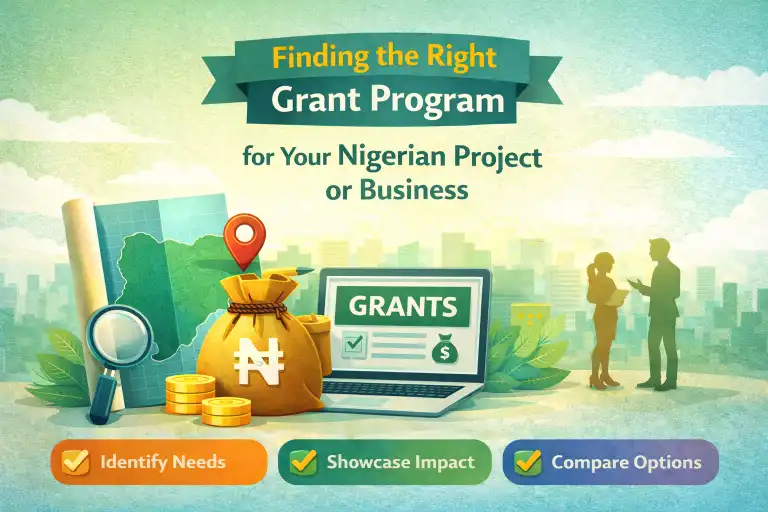
This guide explains how to find the best grant program for your Nigerian business or project and how to position yourself for approval.
Why choosing the right grant matters
Many entrepreneurs believe that applying for as many grants as possible increases their chances of receiving funding. In reality, the opposite is often true.
Grant providers look for strong alignment between the applicant and the program’s objectives. When your project clearly fits the purpose of the grant, your application becomes stronger.
Choosing the right grant program helps you:
- Increase approval chances
- Save time on unnecessary applications
- Focus on programs that support your sector
- Prepare stronger proposals
Strategic applications are more effective than random submissions.
Understand the different types of grants available
Grant programs vary widely depending on their objectives. Understanding the categories helps you identify the best opportunities.
Startup grants
Startup grants focus on early-stage entrepreneurs who need capital to launch or validate business ideas.
These grants typically support:
- Business registration and setup
- Product development
- Market testing
- Innovation projects
Startup grants are ideal for new entrepreneurs with scalable ideas.
Small business growth grants
These grants target existing businesses that want to expand operations.
Funding may support:
- Equipment purchases
- Workforce expansion
- Digital transformation
- Business modernization
Businesses with some operational history usually qualify for these grants.
Youth and student grants
Many programs support young entrepreneurs and students who want to build startups.
These grants encourage:
- Innovation
- Entrepreneurship education
- Youth-led enterprises
Applicants are often required to be within specific age ranges.
Women-focused grants
Some programs are designed specifically to empower women entrepreneurs.
These initiatives provide:
- Seed funding
- Business mentorship
- Leadership development
Women-led businesses often receive priority in these programs.
Innovation and technology grants
Tech startups and innovation-driven projects may qualify for specialized funding programs.
These grants support:
- Software development
- Digital solutions
- Research and development
- Technology commercialization
Innovation-focused grants often require scalable ideas.
Identify your business stage
One of the most important steps in finding the right grant is identifying your business stage.
Grant providers typically categorize applicants into stages such as:
- Idea stage
- Startup stage
- Growth stage
- Expansion stage
Applying for a growth grant with only an idea often leads to rejection. Similarly, applying for startup grants with a large established business may not meet eligibility requirements.
Matching your business stage with the correct grant program improves success rates.
Evaluate your industry sector
Many grant programs prioritize specific industries.
Common priority sectors include:
- Agriculture and agribusiness
- Technology and digital services
- Manufacturing and local production
- Creative industries
- Renewable energy
Projects operating within high-impact sectors often receive stronger consideration.
Understanding sector priorities helps you focus your search.
Check eligibility requirements carefully
Before applying for any grant program, review the eligibility criteria carefully.
Common requirements include:
- CAC business registration
- Nigerian citizenship or residency
- Business bank account
- Detailed business plan
- Clear use of funds
Ignoring eligibility rules is one of the most common reasons grant applications fail.
Always confirm that your business meets the minimum requirements.
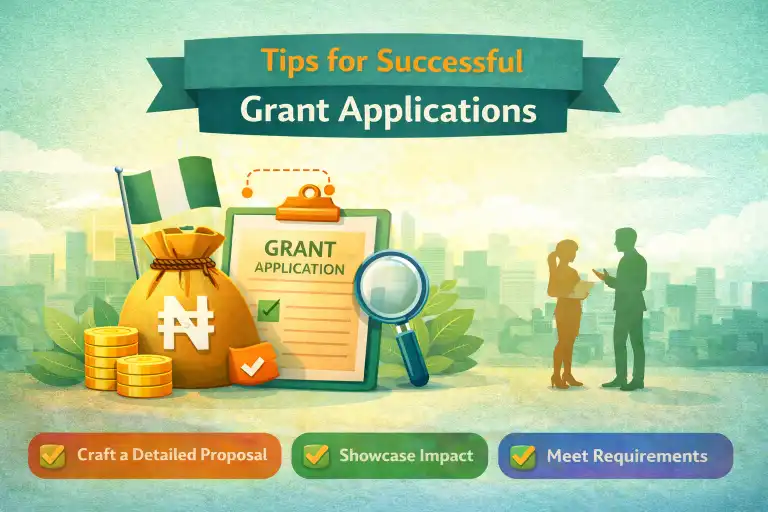
Prepare a strong grant proposal
Once you identify the right program, preparation becomes critical.
A strong grant proposal should clearly explain:
- The problem your business solves
- Your target customers
- How the funding will be used
- Expected outcomes and impact
Grant reviewers want to see clear value and measurable results.
Avoid vague explanations and unrealistic projections.
Build credibility before applying
Many successful grant applicants establish credibility before applying.
This may include:
- Registering the business formally
- Building a basic operational track record
- Developing a prototype or service
- Demonstrating early customer demand
Even small achievements can strengthen your application.
Grant providers prefer applicants who show commitment and progress.
Apply to multiple relevant programs
Grant programs are competitive. Approval is never guaranteed.
To increase your chances:
- Identify several programs aligned with your business
- Apply to multiple opportunities
- Customize each application to the program
Avoid copying the same proposal across different grants.
Each application should clearly align with the program’s mission.
Stay organized and track deadlines
Grant opportunities often have strict deadlines.
Entrepreneurs should maintain a simple system to track:
- Application deadlines
- Required documents
- Submission status
- Follow-up requirements
Staying organized prevents missed opportunities.
Avoid common grant search mistakes
Many Nigerian entrepreneurs struggle to secure grants because of avoidable mistakes.
Common errors include:
- Applying for unrelated programs
- Ignoring eligibility requirements
- Submitting incomplete applications
- Missing deadlines
- Using generic proposals
Avoiding these mistakes significantly improves your chances.
Think long-term when pursuing grants
Grants should not be viewed as quick cash. Instead, they should be part of a long-term business growth strategy.
Successful entrepreneurs often:
- Use grants to develop infrastructure
- Build capacity and skills
- Invest in equipment or technology
- Expand into new markets
Using grants strategically creates stronger businesses.
Final thoughts
Finding the right grant program for your Nigerian project or business requires research, planning, and strategic alignment.
Rather than chasing every available opportunity, focus on programs that match your business stage, sector, and goals.
Entrepreneurs who take time to understand grant requirements and prepare strong proposals dramatically increase their chances of receiving funding.
With the right approach, grant funding can provide the capital needed to launch ideas, expand businesses, and create lasting economic impact.
Frequently Asked Questions (FAQ)
How can I find grant programs for Nigerian entrepreneurs?
You can discover opportunities through government initiatives, development programs, entrepreneurship support organizations, and business funding platforms.
Do Nigerian grant programs require business registration?
Many programs require CAC registration, although some startup grants may accept early-stage entrepreneurs.
Can startups apply for multiple grants at the same time?
Yes. Applying for multiple relevant programs can increase your chances of securing funding.
Do grants require repayment?
Most grants are non-repayable if all program conditions are followed.
What improves my chances of winning a grant?
A strong proposal, clear business plan, proper documentation, and alignment with program objectives.
Are grants available for students and youth entrepreneurs?
Yes. Many programs specifically target youth-led and student-led businesses.
How competitive are Nigerian grant programs?
They are highly competitive because many entrepreneurs apply for limited funding opportunities.
Can grants help businesses grow long-term?
Yes. Grants can support equipment purchases, innovation, and expansion without creating debt pressure.