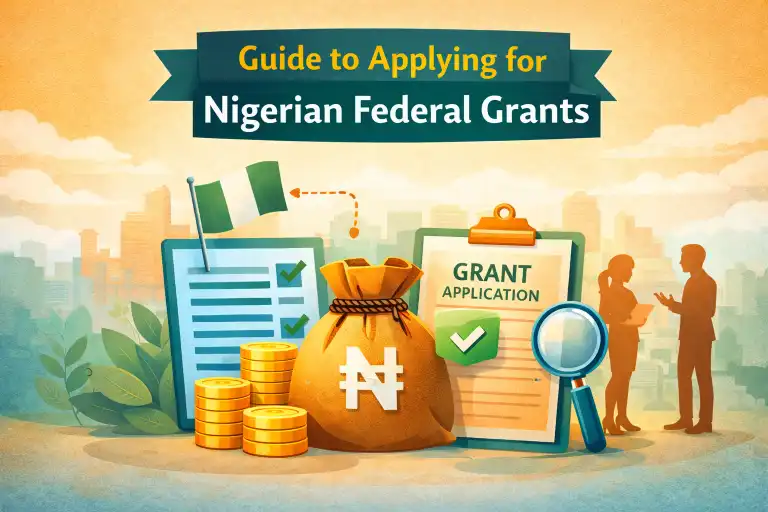
Securing a Nigerian federal grant can be a major breakthrough for entrepreneurs, nonprofits, and community projects. Grants provide funding that does not require repayment, making them one of the safest ways to finance innovation, business growth, and development initiatives.
However, applying for federal grants is not simply filling out a form. The process requires preparation, proper documentation, and a clear understanding of the program’s objectives.
Many applicants fail because they rush the process or apply without meeting the requirements. A structured approach dramatically increases your chances of approval.
This guide provides a step-by-step walkthrough on how to apply for Nigerian federal grants successfully.
Step 1: Identify the right federal grant program
The first and most important step is finding a grant program that matches your project or business.
Federal grants are designed for specific purposes such as:
- Entrepreneurship and small business development
- Youth empowerment
- Innovation and technology
- Agriculture and agribusiness
- Community development projects
Applying for the wrong program is one of the biggest reasons applications fail.
Before applying, review:
- Program objectives
- Eligibility requirements
- Target beneficiaries
- Application deadlines
A grant that aligns with your project goals is much easier to win.
Step 2: Confirm eligibility requirements
Every federal grant program has eligibility conditions that applicants must meet.
Common requirements include:
- Nigerian citizenship
- Registered business or organization
- Valid identification (NIN or national ID)
- Business bank account
- A clear project proposal or business plan
Some grants also target specific groups such as:
- Youth entrepreneurs
- Women-led businesses
- Students or early-stage innovators
Confirm that you meet all criteria before proceeding with the application.
Step 3: Prepare a strong business plan or project proposal
A well-structured proposal is one of the most important parts of a successful grant application.
Your proposal should clearly explain:
- The problem your project addresses
- Your proposed solution
- Target beneficiaries or customers
- Expected impact or outcomes
- Timeline for implementation
Grant reviewers want to see that the project is realistic, organized, and capable of producing measurable results.
Avoid vague ideas. Be specific about how the funding will be used.
Step 4: Develop a detailed budget
Most federal grants require a clear financial plan showing how the funds will be spent.
A typical grant budget may include:
- Equipment purchases
- Operational costs
- Personnel expenses
- Training or capacity-building costs
- Administrative expenses
Each budget item should be connected directly to project activities.
Unclear or unrealistic budgets are common reasons applications are rejected.
Step 5: Gather required documents
Grant applications usually require several supporting documents.
Common documents include:
- CAC registration certificate
- Valid identification (NIN or national ID)
- Business bank account details
- Business plan or proposal
- Passport photograph
- Financial projections or statements
Preparing these documents early helps prevent delays during the application process.
Step 6: Complete the application form carefully
Once your documents are ready, the next step is completing the official application form.
Pay close attention to:
- Required sections
- Word limits
- Supporting documents
- Formatting guidelines
Avoid leaving fields incomplete. Incomplete applications are often disqualified automatically.
Carefully review the entire application before submitting it.
Step 7: Submit your application before the deadline
Grant programs operate on strict timelines.
Submitting early provides several advantages:
- Time to correct errors
- Opportunity to upload missing documents
- Reduced risk of technical issues
Waiting until the last day increases the chance of mistakes.
Treat deadlines seriously.
Step 8: Prepare for follow-up or interviews
Some federal grant programs conduct additional evaluation stages.
These may include:
- Shortlisted interviews
- Project presentations
- Verification checks
- Additional document requests
Applicants should be ready to explain their project clearly and confidently.
Transparency and preparation make a strong impression.
Step 9: Monitor application status
After submission, it is important to track the progress of your application.
Grant agencies may provide updates through:
- Email notifications
- Official portals
- Shortlisted announcements
Monitoring your application helps you respond quickly if additional information is requested.
Step 10: Comply with grant requirements after approval
Receiving a grant is only the beginning. Successful applicants must follow program rules during project implementation.
Grant recipients may need to:
- Submit financial reports
- Track project milestones
- Document how funds are used
- Provide impact reports
Compliance ensures continued eligibility for future funding opportunities.
Common mistakes to avoid
Many Nigerian entrepreneurs lose funding opportunities because of avoidable mistakes.
Common errors include:
- Applying for the wrong grant program
- Submitting incomplete documents
- Missing application deadlines
- Poorly written proposals
- Unrealistic budgets
Avoiding these mistakes significantly improves success rates.
Tips to increase your chances of approval
Successful applicants often follow these best practices:
- Research grant programs carefully
- Prepare a clear and realistic project plan
- Submit complete documentation
- Apply early
- Follow all application guidelines
Preparation and attention to detail are essential.
Final thoughts
Applying for Nigerian federal grants requires patience, preparation, and strategy. Entrepreneurs who approach the process systematically have a much higher chance of success.
By choosing the right program, preparing strong proposals, and following application guidelines carefully, applicants can access funding that supports business growth and community development.
Federal grants provide an opportunity to build sustainable projects without taking on debt, making them one of the most valuable funding options available.
Frequently Asked Questions (FAQ)
Who can apply for Nigerian federal grants?
Eligibility varies by program, but many grants support entrepreneurs, startups, nonprofits, and community organizations.
Do federal grants require repayment?
No. Grants are non-repayable if program conditions are followed.
Do I need CAC registration to apply for grants?
Most programs require business or organizational registration.
How long does it take to receive grant approval?
Approval timelines vary depending on the program and number of applications.
Can startups apply for federal grants?
Yes. Many programs support early-stage entrepreneurs and innovators.
What improves my chances of winning a grant?
A clear proposal, realistic budget, complete documentation, and strong alignment with the program objectives.
Are federal grants available nationwide in Nigeria?
Many federal grant programs operate across all states.
Can I apply for more than one grant at the same time?
Yes, as long as the applications meet the eligibility requirements.