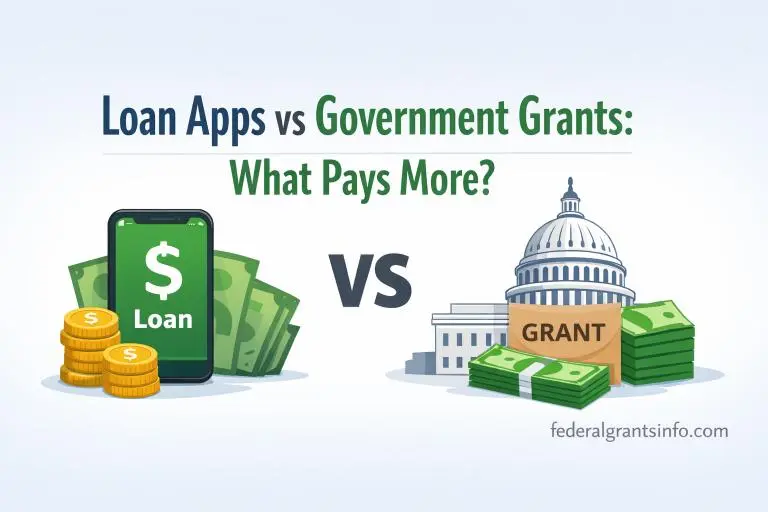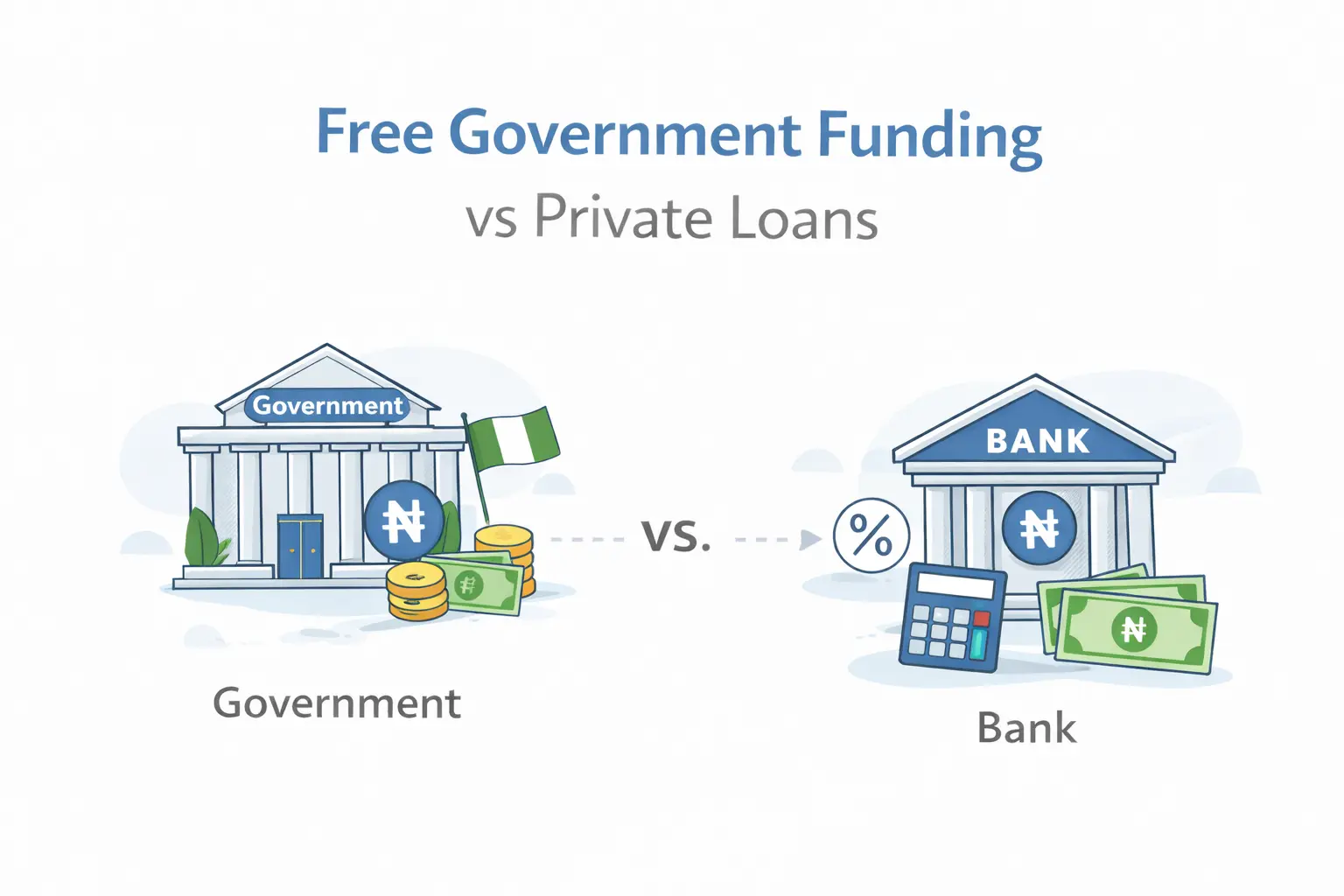
Access to capital is one of the biggest challenges businesses face. When funding is needed, two options usually stand out. Free government funding and private loans. One promises no repayment. The other offers speed and flexibility, but with financial pressure.
In 2026, choosing between these options is no longer simple. Costs are higher. Cash flow is tighter. Mistakes are expensive. The right choice depends on risk tolerance, timing, and growth strategy, not popularity.
This guide compares free government funding and private loans in clear, money-focused terms. The goal is smarter capital decisions, not assumptions.
What free government funding really means
Free government funding usually comes in the form of grants or non-repayable support programs. These funds do not require repayment if all conditions are met.
They are designed to support specific outcomes, not everyday operations.
Free government funding is commonly used for:
- Innovation and product development
- Job creation and skills training
- Sustainability and environmental projects
- Research and early-stage business support
The biggest advantage is obvious. There is no debt. No interest. No monthly repayment pressure.
The trade-off is structure. Applications are competitive. Approval is slow. Spending is restricted. Reporting is mandatory.
Free government funding reduces financial risk but limits flexibility.
What private loans really mean
Private loans are funds provided by banks or non-bank lenders that must be repaid with interest.
They are designed for speed and flexibility.
Private loans are commonly used for:
- Working capital
- Inventory and equipment
- Marketing and expansion
- Short-term operational needs
The advantage is fast access. Funds can often be used for almost any business purpose.
The cost is repayment pressure. Interest adds up. Missed payments create penalties. Cash flow must support the obligation regardless of performance.
Private loans increase growth speed but also increase financial risk.
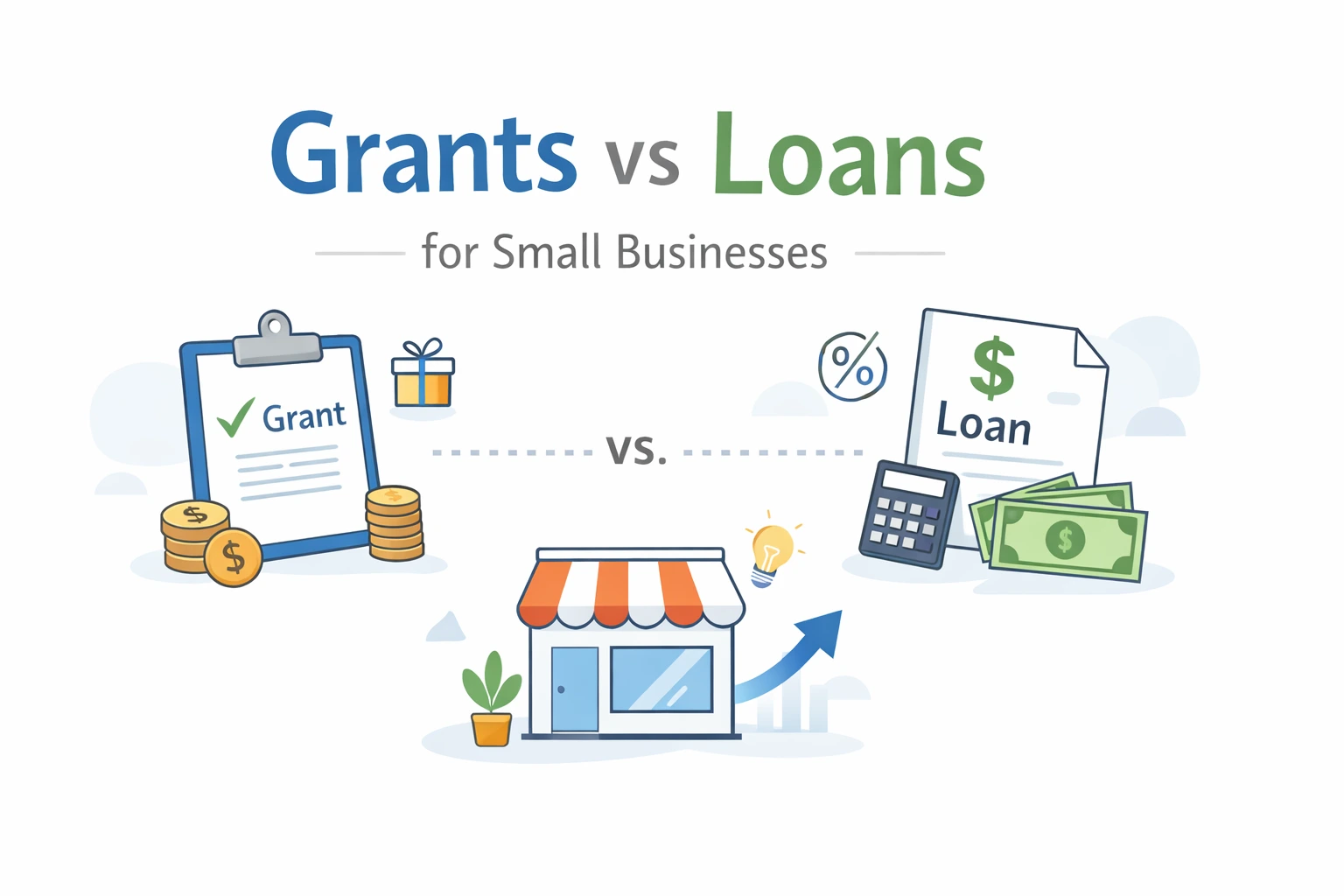
Free government funding vs private loans: direct comparison
| Factor | Free Government Funding | Private Loans |
|---|---|---|
| Repayment | None if compliant | Required with interest |
| Interest cost | Zero | High over time |
| Approval speed | Slow | Fast |
| Use of funds | Restricted | Flexible |
| Cash-flow pressure | Low | High |
| Financial risk | Low | Medium to high |
| Best use case | Long-term projects | Revenue-driven growth |
This comparison highlights a key difference.
Government funding protects stability.
Private loans prioritize execution speed.
When free government funding makes more sense
Free government funding is the better choice when protecting cash flow matters more than speed.
It works best if:
- The business is early-stage or pre-revenue
- Repayment would threaten survival
- The project has clear, measurable outcomes
- Time flexibility exists
Government funding is ideal for building foundations, not covering daily expenses.
When private loans make more sense
Private loans make sense when capital directly generates revenue.
They work best if:
- Cash flow is predictable
- Sales can cover repayments
- Funding is needed urgently
- Spending priorities may change
Loans are suitable for businesses that already have momentum.
The hidden costs many businesses ignore
Free government funding is not truly free. The hidden cost is time and compliance. Long approval delays can stall growth. Reporting adds workload.
Private loans carry hidden pressure. Interest is only part of the cost. Repayment stress during slow periods can force poor decisions.
The real cost is not just money. It is operational strain.
Can free government funding replace private loans?
In most cases, no.
Free government funding is limited in scale and scope. It cannot support every operational need. It is not designed for daily cash flow.
Private loans exist because businesses need capital before revenue arrives.
However, free government funding can reduce how much a business needs to borrow.
A smarter approach: use both strategically
Many businesses use both options together.
A common strategy includes:
- Free government funding for equipment or innovation
- Smaller private loans for working capital
- Grants to reduce overall borrowing needs
This approach balances stability with growth.
How to choose the right option for your business
Ask these questions honestly:
Can my business handle fixed repayments during slow months?
Is speed more important than cost right now?
Does this funding generate revenue or add pressure?
Do I need flexibility or structure?
Clear answers guide better decisions.
Final perspective
Free government funding and private loans serve different purposes.
Free government funding reduces risk but demands patience.
Private loans increase speed but require discipline.
The best option depends on cash flow strength, urgency, and risk tolerance.
Capital should support growth without threatening survival.
Frequently Asked Questions (FAQ)
Is free government funding really free?
There is no repayment if rules are followed, but time, compliance, and reporting are real costs.
Are private loans better than government funding?
Not always. Loans are faster and flexible, but they increase financial pressure. Funding choice depends on business stage.
Can businesses use both government funding and private loans?
Yes. Many businesses combine grants with smaller loans to balance risk and growth.
Which option is safer for small businesses?
Free government funding is safer because it does not create debt. It is also harder to access.
Why do businesses still take loans if grants exist?
Loans provide speed, scale, and flexibility that grants cannot always offer.
Can government funding be used for daily expenses?
Usually no. Most programs restrict spending to approved project costs.
Which option supports faster growth?
Private loans usually support faster growth due to quick access and flexible use.
What happens if government funding rules are broken?
Funding may be withdrawn, and repayment or penalties may be required.