Most people think startup capital must come from investors or loans. That is no longer fully true. In 2026, many business grants now function like startup capital, especially for early-stage founders who want growth without debt or equity loss.
These grants do not require repayment.
They also do not behave like traditional, slow public funding.
Instead, they are designed to seed businesses, fund product development, support market entry, and validate ideas. When used correctly, they can replace early-stage investment.
This article explains how certain business grants act like startup capital, what makes them different, and when they are a smart alternative to investors or loans.
What “startup-capital-style” grants really mean
Startup capital is money used to build, test, and launch a business. It usually funds product development, early hiring, market testing, and systems.
Grants that act like startup capital share these traits:
- Non-repayable funding
- Early-stage eligibility
- Focus on growth or innovation
- Flexible use within defined goals
- No ownership dilution
These grants are designed to reduce startup risk, not just support established firms.
Why governments use grants as startup capital
Governments use these grants to stimulate entrepreneurship where private capital is cautious.
Early-stage startups are risky. Many investors wait for traction. Banks avoid pre-revenue businesses. Grants fill this gap.
These grants aim to:
- Encourage innovation
- Reduce startup failure rates
- Support founders without access to capital
- Accelerate new business creation
- Build long-term economic value
They act as first money in, similar to pre-seed funding.
Types of business grants that act like startup capital
Innovation and technology grants
These grants fund new ideas, products, and solutions. They are common in technology, manufacturing, agriculture, health, and energy.
Funds are often used for:
- Prototyping
- Product development
- Testing and validation
- Early technical hiring
They behave like pre-seed capital without equity loss.
Startup and early-stage business grants
Some grants are created specifically for startups. Eligibility may be based on business age, revenue level, or founder profile.
These grants often support:
- Business setup
- Market entry
- Tools and infrastructure
- Early operations
They replace the need for small angel checks.
Research and development grants
R&D grants fund experimentation and discovery. Profit is not required at the early stage.
These grants allow startups to build intellectual property and proof of concept before seeking investors.
They often attract investors later because risk is already reduced.
Sustainability and climate innovation grants
These grants support startups working on environmental and efficiency solutions.
They frequently act as startup capital for:
- Clean energy ventures
- Circular economy businesses
- Climate-tech startups
They fund early development without forcing revenue pressure.
Workforce and skills-based startup grants
Some grants fund training, hiring, and capability building for startups.
They help founders build teams without burning cash. This improves survival rates during early growth stages.
How these grants differ from traditional grants
Traditional grants focus on stability and compliance. Startup-style grants focus on momentum.
Key differences include:
- Faster decision cycles
- Smaller but flexible funding amounts
- Startup-friendly eligibility
- Outcome-based milestones
- Less emphasis on long reporting cycles
They are built to move businesses forward, not slow them down.
What these grants can usually be used for
While still regulated, startup-style grants are more flexible.
Common approved uses include:
- Product development
- Software and tools
- Equipment and technology
- Early hiring or contractors
- Market testing and pilots
- Business infrastructure
They are designed to help founders execute, not just plan.
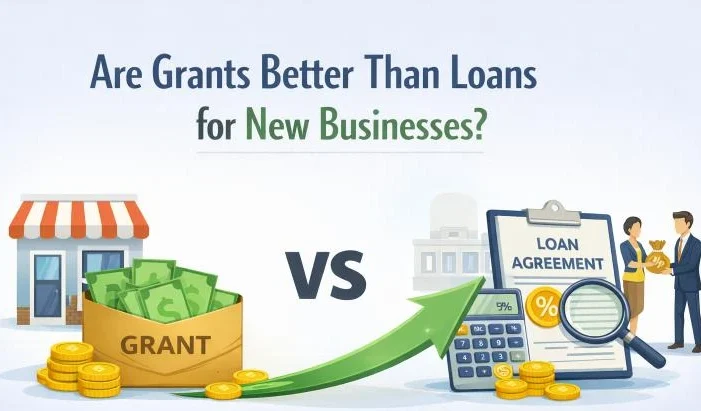
Advantages over loans and investors
Compared to loans:
- No repayment pressure
- No interest cost
- No cash-flow stress
Compared to investors:
- No equity dilution
- Full founder control
- No valuation pressure
This makes them ideal for founders who want capital without compromise.
Limitations founders must understand
Startup-style grants are powerful, but not perfect.
Limitations include:
- Competitive selection
- Defined project scope
- Milestone requirements
- Compliance obligations
They also do not fund everything. They are not meant for personal expenses or unrelated costs.
When business grants can replace startup capital
Grants can fully replace startup capital when:
- The business is early-stage
- Funding is for development, not scaling
- Revenue is not immediate
- Risk reduction is the priority
- The founder can operate within guidelines
In these cases, grants perform the same role as pre-seed or seed capital.
When grants should complement other capital
Grants work best alongside other funding when:
- The business is scaling quickly
- Working capital is needed
- Sales expansion is required
Many startups use grants first, then attract investors or use revenue later.
Common mistakes founders make
Founders often misunderstand these grants.
Common mistakes include:
- Treating them as free cash
- Ignoring compliance requirements
- Applying without a clear project
- Waiting too long and missing opportunities
These grants reward preparation and clarity.
A smart startup funding path
A common successful path looks like this:
- Startup-style grant for development
- Revenue or pilot traction
- Investor funding for scale
This reduces dilution and improves valuation later.
Final perspective
Business grants that act like startup capital are one of the most underused funding tools in 2026.
They provide early momentum without debt or equity loss.
They reduce risk when it matters most.
They help founders build before they sell.
For many startups, these grants are not support tools.
They are the first real capital.
Frequently Asked Questions (FAQ)
What makes a business grant act like startup capital?
These grants fund early-stage development, allow flexible use within goals, and do not require repayment or equity. They serve the same role as pre-seed funding.
Can grants fully replace angel investors for startups?
In early stages, yes. Grants can replace angel capital for development and validation. Investors are usually needed later for scaling.
Are startup-style grants only for tech companies?
No. They also support manufacturing, agriculture, sustainability, health, creative industries, and service innovation.
Do these grants require repayment if the startup fails?
Usually no, as long as funds were used correctly and reporting rules were followed.
How large are startup-capital-style grants?
They are typically smaller than venture funding but large enough to build prototypes, test markets, and hire early talent.
Do these grants affect future investor interest?
Often positively. Grants reduce risk and validate credibility, which can improve investor confidence.
Can founders apply for multiple startup grants?
Yes, if rules allow and the same costs are not funded twice.
Are these grants suitable for scaling a business?
They are best for early stages. Scaling usually requires revenue or investment later.