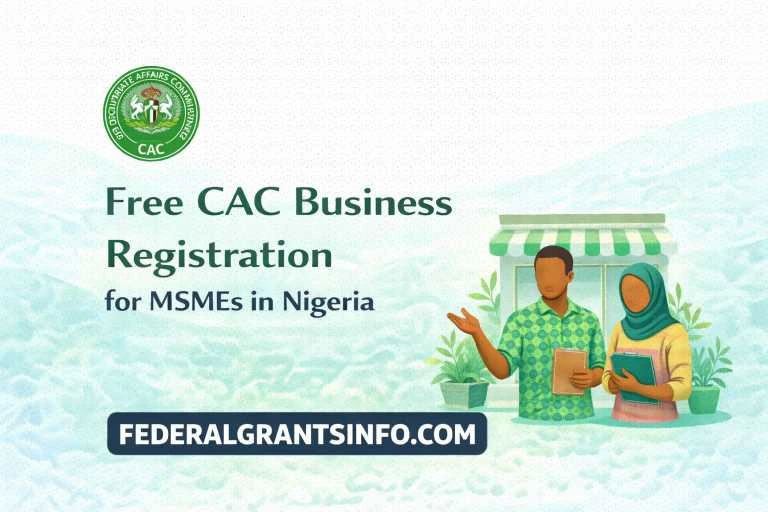
Nigeria’s push to formalise small businesses has taken a practical turn with a new collaboration between Small and Medium Enterprises Development Agency of Nigeria and the Corporate Affairs Commission. Under this initiative, 250,000 MSMEs will receive free CAC business name registration, removing one of the most common barriers that keeps many entrepreneurs operating informally.
This move is part of a wider effort to strengthen the MSME ecosystem by bringing small businesses into official records, improving access to support programmes, and building trust between entrepreneurs, lenders, and customers.
Why this matters beyond “free registration”
For many Nigerian entrepreneurs, business registration is delayed not because of lack of interest, but because of cost, process confusion, or fear of bureaucracy. By absorbing the registration fee, the programme lowers the entry barrier and makes it easier for traders, artisans, startups, and service providers to formalise their operations.
Formalisation opens doors. Registered businesses are more likely to qualify for grants, intervention funds, training, tax incentives, and partnerships that are simply not available to informal operators. It also helps government agencies design better policies using real MSME data.
Who the programme is really targeting
The free registration drive is aimed at everyday business owners who are already active but undocumented. This includes roadside traders, home-based businesses, digital entrepreneurs, cooperatives, and early-stage startups that have not yet registered with CAC.
Businesses that already exist in SMEDAN’s records but never completed CAC registration are also captured. Once the slots are filled, new entries will not be accepted under this free window.
How the process works in practice
Rather than applying directly at CAC, entrepreneurs first enter through SMEDAN’s online platform. This allows SMEDAN to update its MSME database while coordinating the free registration process with CAC behind the scenes.
After creating a profile and submitting business details, eligible applicants are guided through the steps required to complete their CAC business name registration without payment. Those who struggle with online forms can also get support through SMEDAN state offices and business clinics across the country.
Official signup link:
https://portal.smedan.gov.ng/signup
What happens after registration
Once a business name is registered:
- The enterprise gains legal identity and can operate more confidently
- Owners can open business bank accounts and apply for formal financing
- The business becomes visible for future government and private-sector programmes
- Entrepreneurs can access training, mentoring, and market-linkage opportunities tied to SMEDAN’s ecosystem
This is not just a one-off registration exercise. It is designed as an entry point into longer-term MSME support.
Important things applicants should note
Slots are limited and allocated on a rolling basis. Waiting too long may mean missing out. All information provided must be accurate and verifiable, as inconsistencies can delay or invalidate registration. Entrepreneurs are also advised to rely only on official SMEDAN channels and avoid third-party “agents” asking for payment—registration under this programme is free..
The bigger picture
Nigeria has millions of small businesses operating outside the formal economy. Programmes like this help close that gap, improve data-driven policymaking, and give entrepreneurs a stronger foundation to grow. For MSMEs planning to access funding, expand operations, or engage with larger markets in 2026, formal registration is no longer optional—it is strategic.
This free registration window gives business owners a rare chance to take that step without financial pressure.