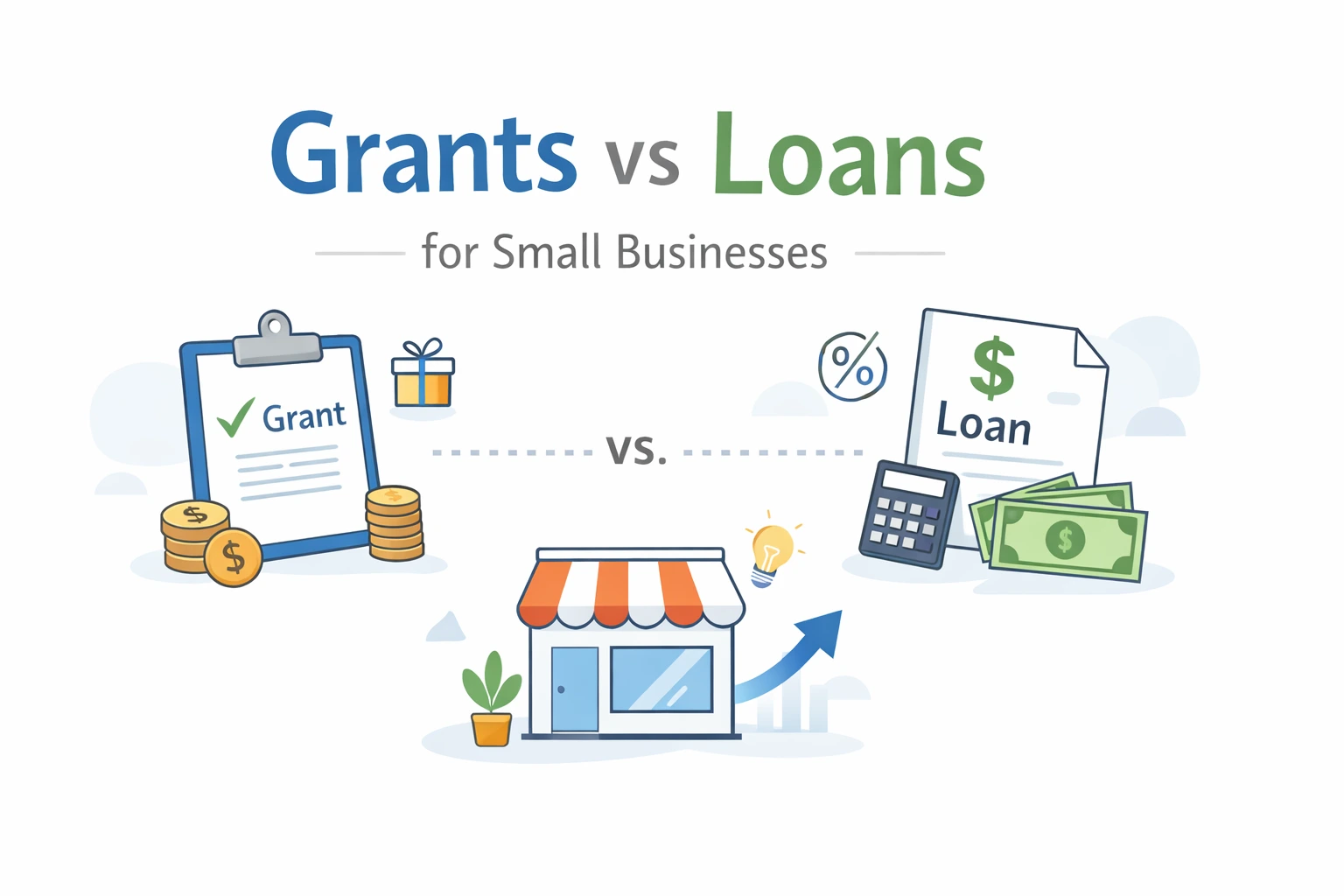
Many businesses struggle because they rely on a single funding source. Some depend only on grants and wait too long. Others rely only on loans and face repayment pressure. In 2026, the smarter approach is combining grants and loans into one balanced funding strategy.
This strategy reduces risk, protects cash flow, and still allows growth.
Used correctly, grants lower the cost of capital. Loans provide speed and flexibility. Together, they create a funding structure that most businesses can actually sustain.
This guide explains how and why combining grants and loans works, when to use it, and how to avoid common mistakes.
Why relying on one funding source is risky
No funding option is perfect.
Grants are safe but slow.
Loans are fast but risky.
Relying on only one creates problems.
Grant-only strategies often delay execution. Businesses miss opportunities while waiting for approval.
Loan-only strategies increase pressure. One slow month can disrupt operations.
A combined approach spreads risk instead of concentrating it.
What combining grants and loans really means
Combining grants and loans does not mean taking everything available.
It means assigning the right funding to the right purpose.
Grants are used to reduce risk.
Loans are used to drive revenue.
This separation is what makes the strategy work.
How grants fit into a smart funding mix
Grants work best when used for non-urgent, long-term, or foundational needs.
Common grant-funded uses include:
- Equipment and technology
- Product development
- Innovation and research
- Training and systems
- Sustainability upgrades
Because grants do not require repayment, they protect cash flow and lower overall funding cost.
They should not be used for daily expenses or urgent operations.
How loans fit into a smart funding mix
Loans work best when used for time-sensitive, revenue-generating activities.
Common loan-funded uses include:
- Inventory and stock
- Marketing and sales expansion
- Short-term working capital
- Operational scaling
Loans should fund activities that can repay themselves.
If a loan does not directly or indirectly generate revenue, it increases risk.
A simple example of the strategy in action
A business needs to expand operations.
Instead of using one large loan, it does the following:
- Uses a grant to purchase equipment
- Uses a smaller loan for inventory and marketing
The result:
- Lower loan amount
- Lower monthly repayments
- Faster growth
- Reduced financial stress
This is how grants and loans complement each other.
Financial benefits of combining grants and loans
This strategy offers several advantages.
It lowers total borrowing costs.
It reduces repayment pressure.
It improves cash-flow stability.
It increases approval chances for loans.
Lenders often view grant-supported businesses as lower risk because part of the funding is non-repayable.
When combining grants and loans makes the most sense
This strategy works best when:
- The business has multiple funding needs
- Some costs are long-term and some are urgent
- Cash flow must be protected
- Growth opportunities exist but carry risk
It is especially useful for small businesses, startups, and growing enterprises.
When combining funding may not work
This approach is not always ideal.
It may not work if:
- The business lacks financial discipline
- Reporting requirements cannot be met
- The loan repayment plan is unclear
- Grant conditions conflict with loan use
Funding complexity requires good planning.
The biggest mistake businesses make
The most common mistake is overlapping funding.
Using both grants and loans for the same expense can violate grant rules and increase risk.
Another mistake is taking loans too early, before grant decisions are finalized.
Smart sequencing matters.
A practical step-by-step approach
A safer way to combine funding looks like this:
First, identify long-term or fixed costs.
Second, apply for grants to cover those costs.
Third, calculate remaining short-term needs.
Fourth, use smaller loans for revenue-driven activities.
This order reduces dependence on debt.
Why this strategy improves long-term growth
Businesses that combine funding sources are more resilient.
They grow without excessive debt.
They avoid cash-flow shocks.
They maintain flexibility.
This approach supports sustainable growth rather than aggressive expansion.
Final perspective
Combining grants and loans is not about complexity. It is about balance.
Grants lower risk.
Loans create momentum.
Together, they form a funding strategy that many businesses can actually manage.
The smartest funding plans do not chase one option.
They combine tools to protect survival and support growth.
Frequently Asked Questions (FAQ)
Why should businesses combine grants and loans instead of choosing one?
Combining both spreads risk. Grants reduce repayment pressure, while loans provide speed and flexibility for revenue growth.
What expenses should be funded with grants?
Grants are best for equipment, innovation, systems, training, and long-term projects that do not generate immediate revenue.
What expenses should be funded with loans?
Loans should fund activities that increase sales or cash flow, such as inventory, marketing, and short-term working capital.
Does combining grants and loans improve loan approval chances?
Often yes. Grant-backed projects lower risk, which can make lenders more comfortable approving smaller loans.
Can grants and loans be used at the same time?
Yes, as long as they fund different expenses and grant rules are followed strictly.
What is the biggest risk in combining funding sources?
Poor planning. Overlapping use of funds or unclear repayment plans can create compliance and cash-flow problems.
Is this strategy suitable for startups?
Yes. Startups often use grants for development and small loans for operations once revenue begins.
Does combining funding reduce total cost of capital?
In most cases, yes. Grants reduce how much must be borrowed, lowering interest and repayment pressure.